

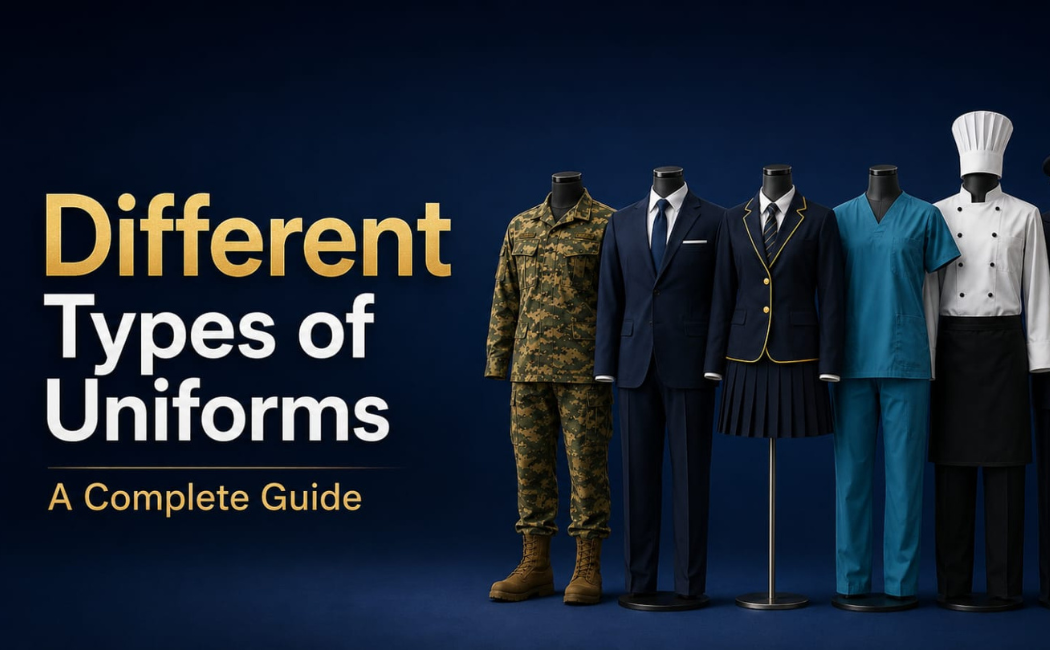
A uniform is a set of clothing worn by people who belong to the same group or organization. Students wear school uniforms. Factory workers wear industrial ones. Athletes have sports uniforms. The point is the same in every case. A uniform tells you who someone is and what they do, often before they say a word.
Uniforms are more than just clothing. They carry the identity of a brand, a profession, or an institution. They build trust, set expectations, and create a sense of belonging among the people who wear them.
If you run a school, manage a corporate office, work in a hospital, or own a sports brand, the right custom uniform can shape how people see your team. This guide covers 13 of the most common uniform types, what makes each one different, and where you will see them used.
13 Types of Uniforms Based on Industry and Purpose
Here is a closer look at the main uniform categories used around the world.
1. Military Uniform
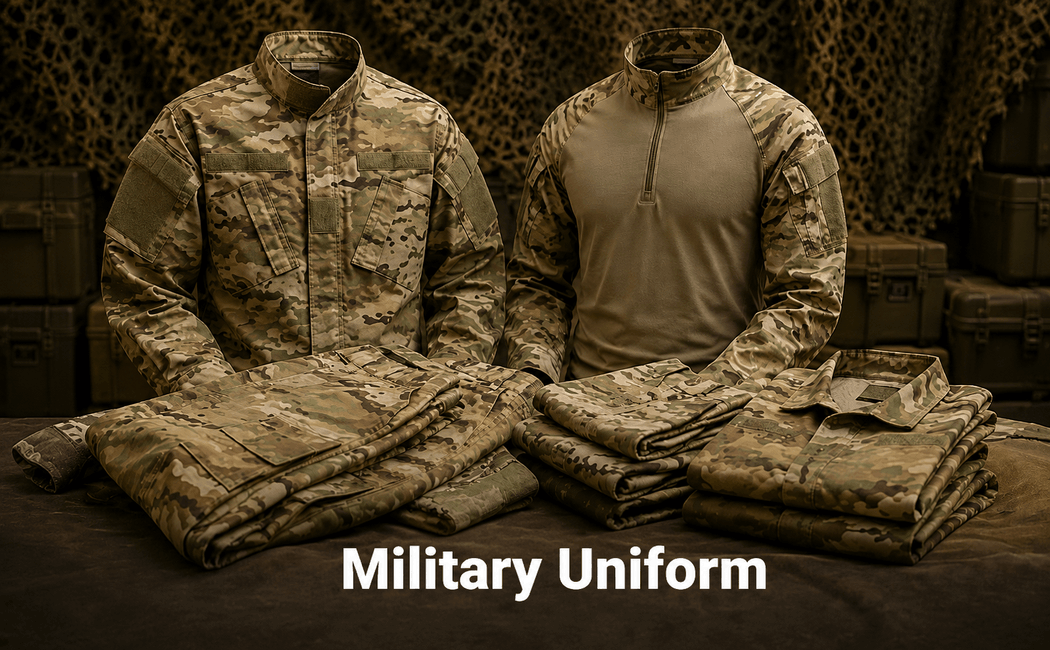
Military uniforms are worn by service members in the army, navy, air force, marines, and other defense branches. They are built to handle tough conditions like heat, cold, rain, and combat zones.
There are five main types of military uniforms:
- The service dress uniform is the formal uniform worn for office duty, parades, and ceremonies. It usually includes a jacket, trousers, and a peaked cap.
- The mess dress uniform is the equivalent of formal evening wear and is worn for official dinners and high-level events.
- The combat uniform, sometimes called a battle dress uniform (BDU) or army combat uniform (ACU), uses camouflage patterns like woodland, desert, or MultiCam to match different terrains. It has cargo pockets, reinforced stitching, and ripstop fabric.
- The utility or working uniform is used during training, maintenance, and base duties.
- The physical training (PT) uniform is worn for exercise and fitness drills.
Military uniforms also carry rank insignia, name tapes, unit patches, and flags that identify the wearer.
2. Corporate Uniform
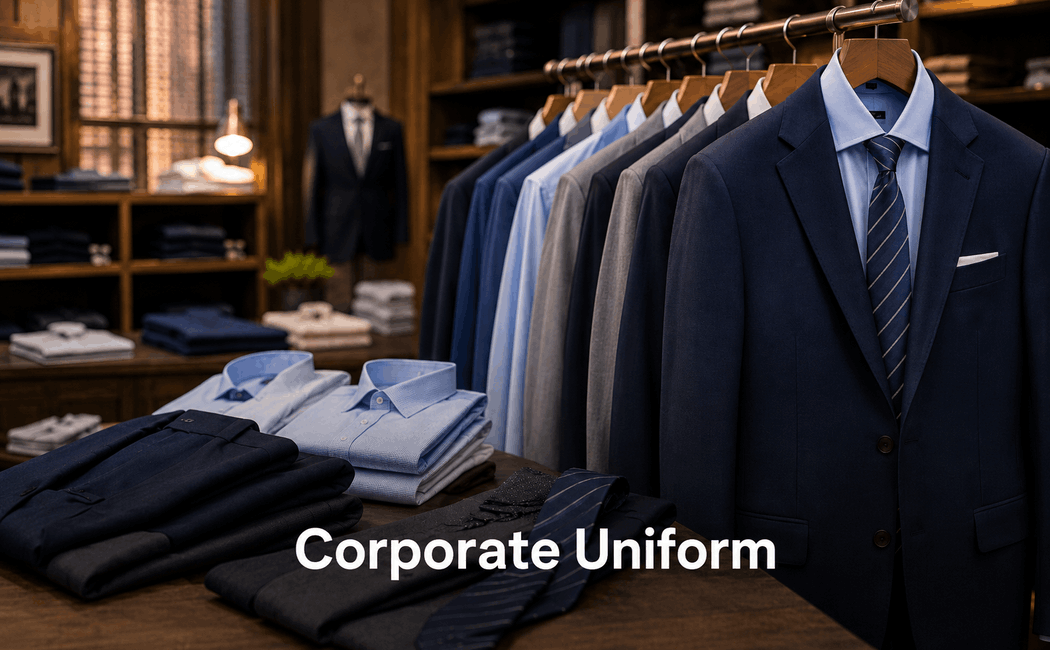
A corporate uniform helps employees look professional and unified at work. It is not always a strict uniform like a school dress code. In most companies, it is closer to a structured dress code with branded elements.
There are three common styles:
- Business formal attire includes suits, dress shirts, ties, and formal shoes. You see this in law firms, banks, and senior corporate roles.
- Business casual includes dress shirts, chinos or trousers, and closed-toe shoes. Many offices follow this style today.
- Branded workwear includes polo shirts, button-downs, or jackets with the company logo. This is common in IT firms, sales teams, and customer-facing roles.
The goal is the same across all three. A corporate uniform creates a clean, consistent image for clients and visitors.
3. School Uniform
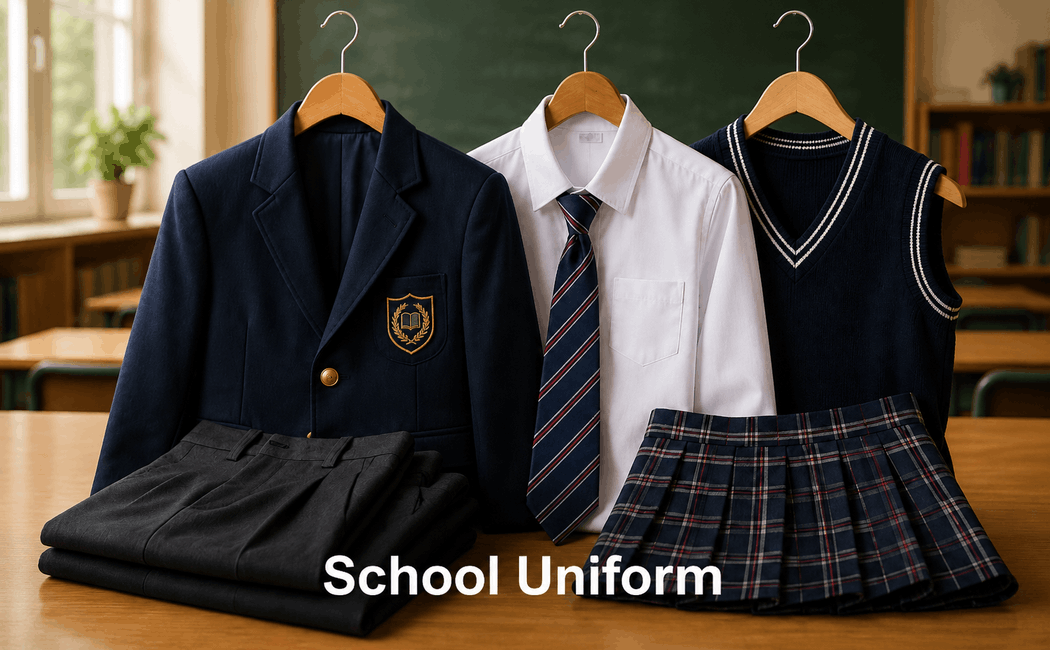
School uniforms are worn by students in primary, secondary, and sometimes university settings. They reduce visible differences between students from different income groups and create a sense of equality on campus.
A school uniform usually includes a shirt, trousers or a skirt, a tie, a blazer or sweater, and proper shoes. The school logo is stitched or printed on the shirt or blazer. Many schools also have separate uniforms for sports, winter, and summer terms.
The colors and designs change from one school to another, but the purpose stays the same. Uniforms keep students focused on learning instead of fashion competition.
4. Prison Uniform
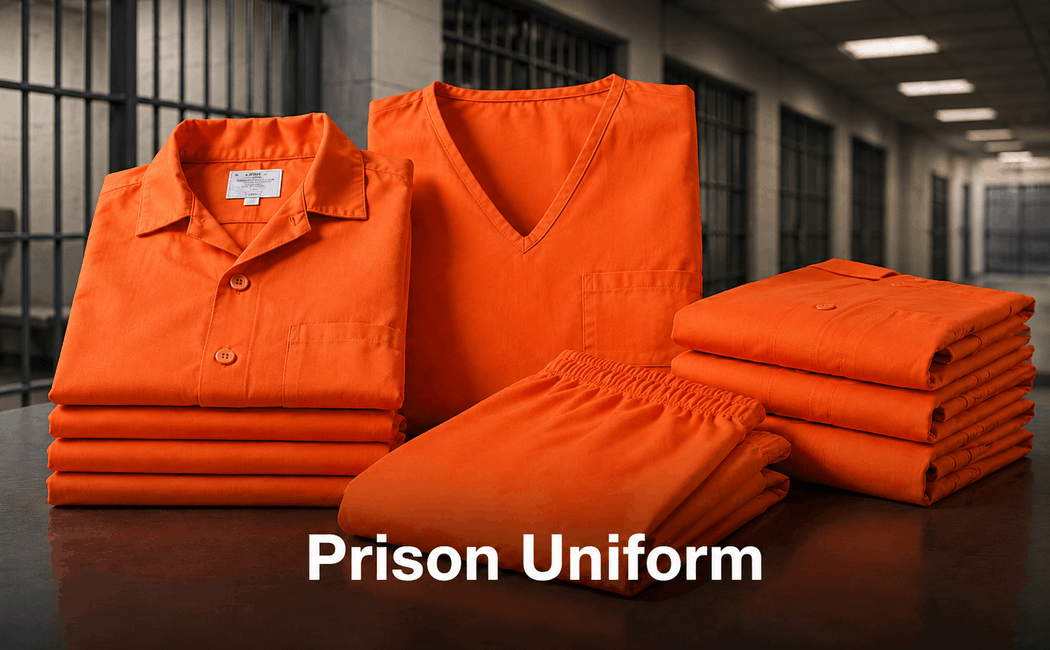
Prison uniforms are worn by people in correctional facilities, including those who have been convicted and those awaiting trial. The uniform helps staff identify inmates quickly and reduces the risk of escape.
In the United States and many other countries, prison uniforms use color coding. Orange jumpsuits often mark the general population or new arrivals. Red can mark high-risk inmates. Khaki, blue, or grey may be used for low-security prisoners. The inmate’s name or ID number is printed on the back or chest.
Prison uniforms are simple by design. They have no pockets that can hide contraband and no belts or shoelaces that could be misused.
5. Medical Uniform
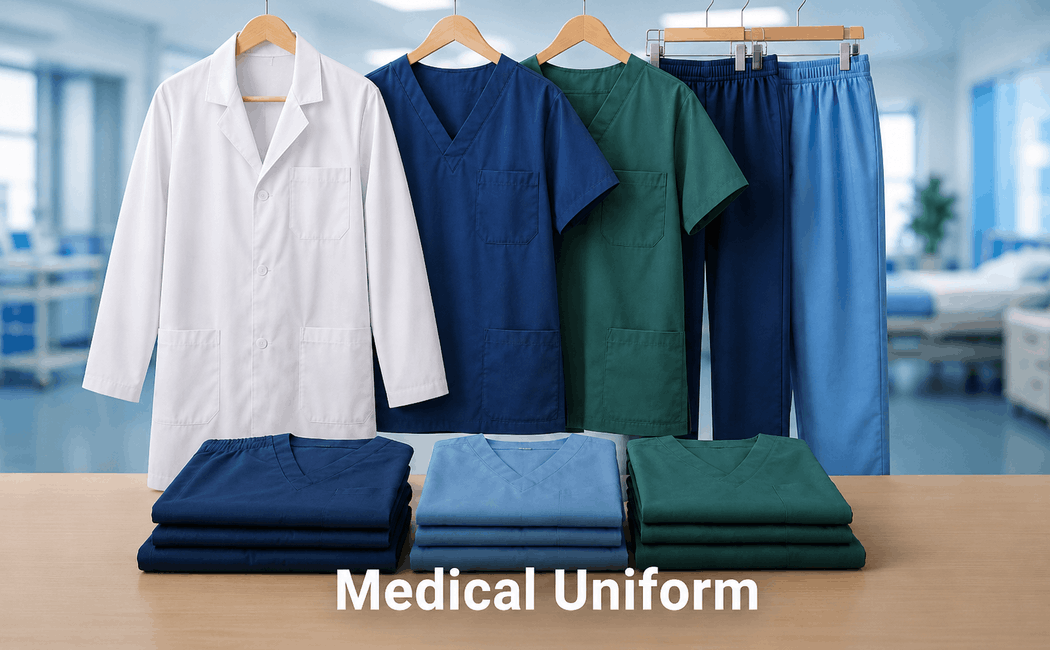
Medical uniforms are worn by doctors, nurses, surgeons, and other healthcare workers. The most common pieces are scrubs (a matching top and bottom set) and the white lab coat.
Scrubs are made from cotton or polyester blends that can handle frequent washing and harsh disinfectants. Many hospitals use color coding to separate departments. For example, surgeons may wear green or blue, pediatric nurses may wear printed scrubs, and other staff may wear specific colors based on their unit.
Surgical staff wear additional gear like sterile gowns, caps, masks, and shoe covers when working in operating rooms. Medical uniforms focus on hygiene, comfort, and easy movement during long shifts.
6. Hospitality Uniform
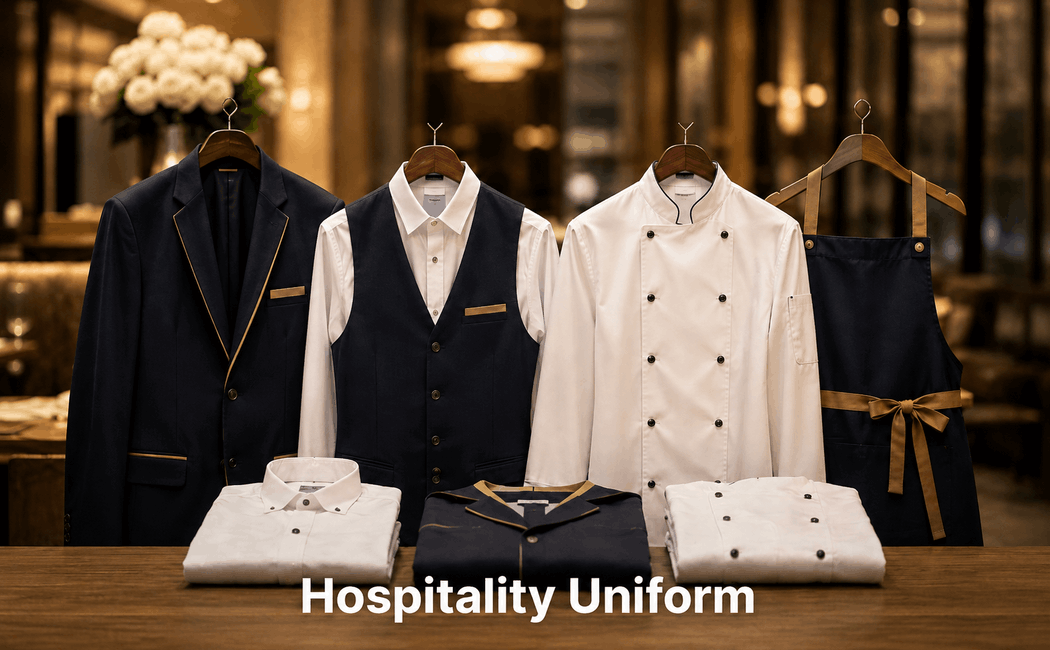
Hospitality uniforms are worn by staff in hotels, restaurants, resorts, cafes, and event venues. The look changes based on the role and the type of property.
Front desk staff and concierges usually wear formal suits or blazers. Housekeeping staff wear simple cotton uniforms that are easy to clean. Waiters and waitresses often wear black trousers with white shirts, sometimes with vests or aprons. Bellhops and valets may have caps and jackets with brass buttons.
Luxury hotels invest more in their hospitality uniforms because they shape how guests judge service quality.
7. Retail and Customer Service Uniform
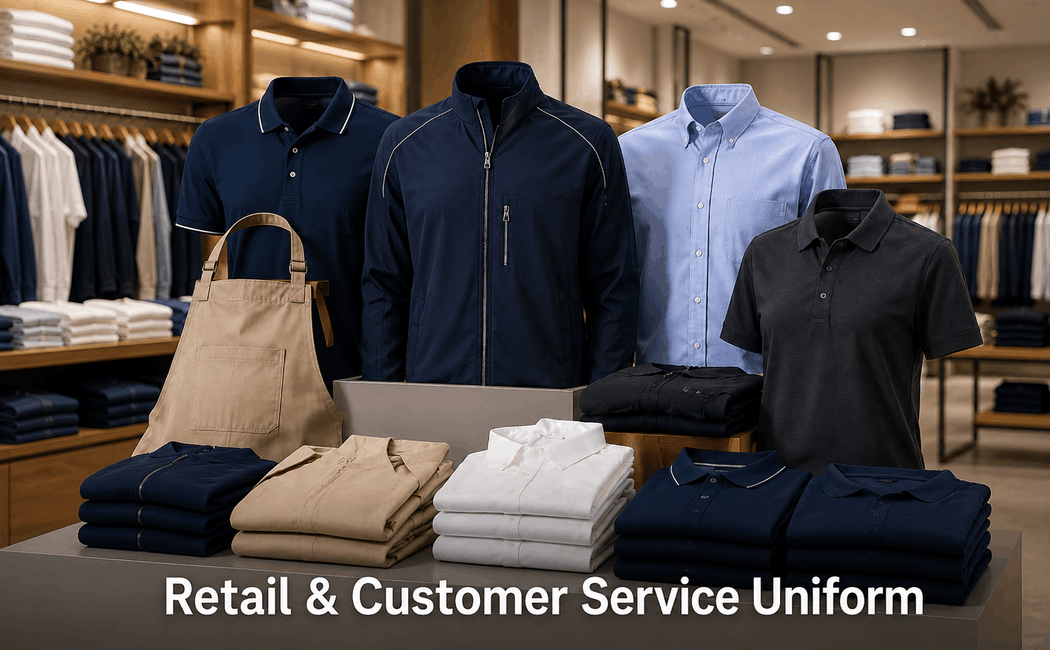
Retail uniforms are worn by staff in shops, supermarkets, malls, and brand outlets. They make employees easy to spot and reinforce the brand identity.
A typical retail uniform is a branded t-shirt or polo paired with trousers or jeans, plus a name tag. Larger stores like Walmart, Target, or IKEA use specific colors that match their brand. Customer service teams in call centers and tech support often wear branded shirts as well, even if they never meet customers face to face.
8. Industrial and Construction Uniform
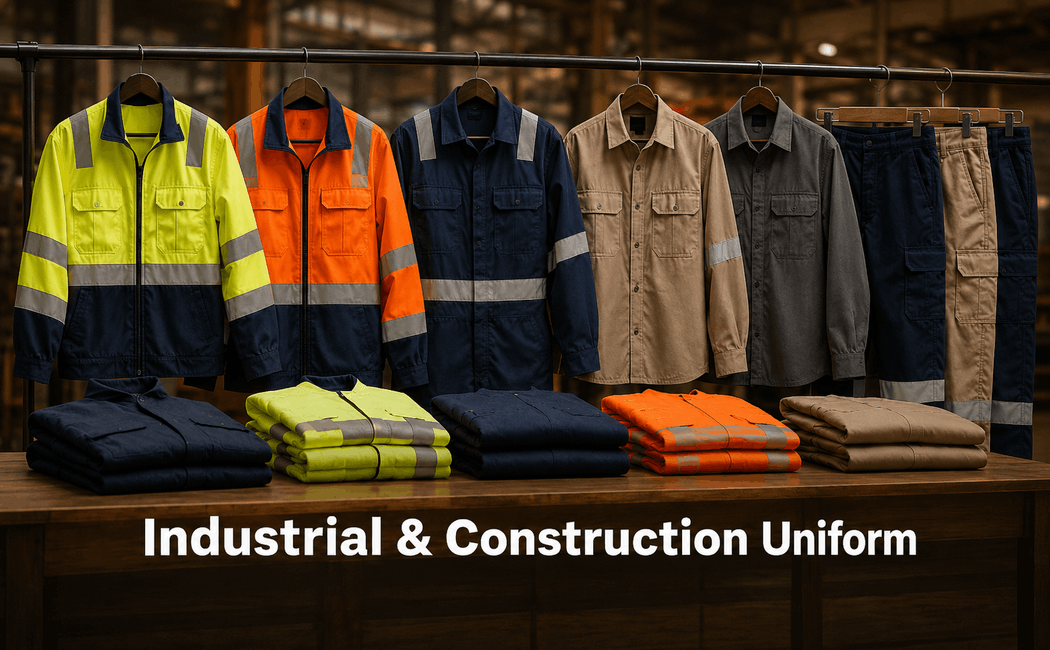
Industrial uniforms are worn by workers in factories, warehouses, construction sites, oil rigs, and mining operations. Safety is the top priority.
These uniforms include high-visibility jackets or vests with reflective tape, hard hats, steel-toe boots, safety gloves, and protective eyewear. The fabric is usually heavy cotton, polyester blends, or flame-resistant materials depending on the job.
Workers in welding, electrical, or chemical industries also wear specialized gear like fire-resistant coveralls, insulated gloves, and full-face shields. Industrial uniforms often meet ANSI safety standards in the United States or similar national codes in other countries.
9. Sports Uniforms
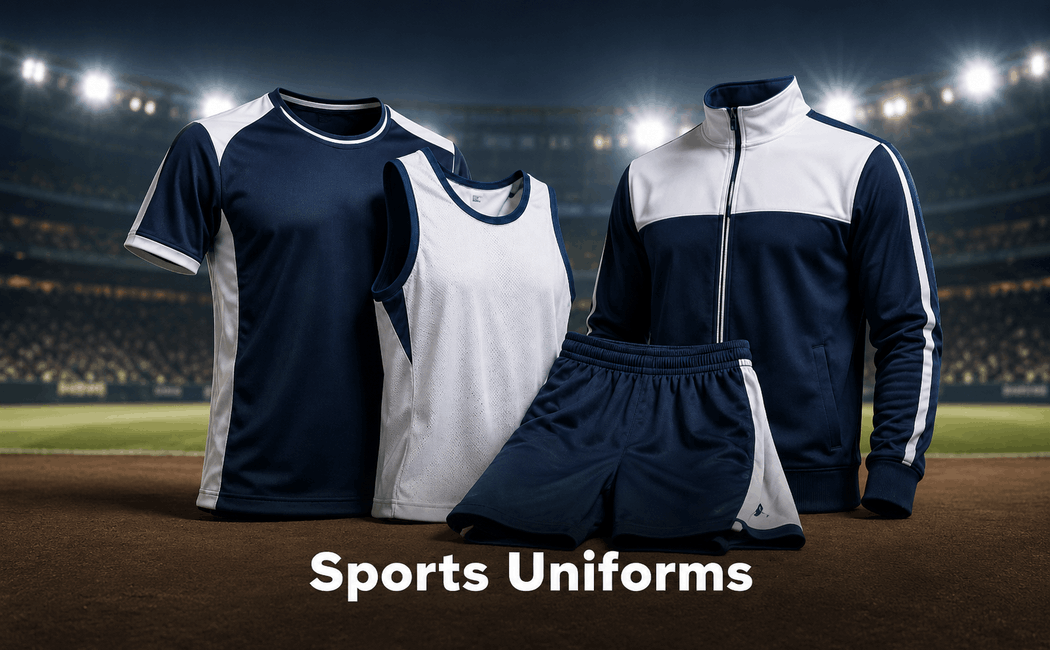
Sports uniforms are worn by athletes during practice and competition. Every sport has its own uniform shaped by the rules and physical demands of the game.
A football kit includes a jersey, shorts, socks, shin guards, and cleats. A basketball uniform has a sleeveless jersey and loose shorts. Baseball uniforms include pants, jerseys, caps, and cleats with metal or rubber spikes. Cricket players wear long trousers, jerseys, and pads.
Most modern sports uniforms use performance fabrics like polyester mesh or moisture-wicking blends. These fabrics pull sweat away from the skin and dry quickly. Team names, sponsor logos, and player numbers are printed or embroidered on the jersey.
10. Police and Law Enforcement Uniform
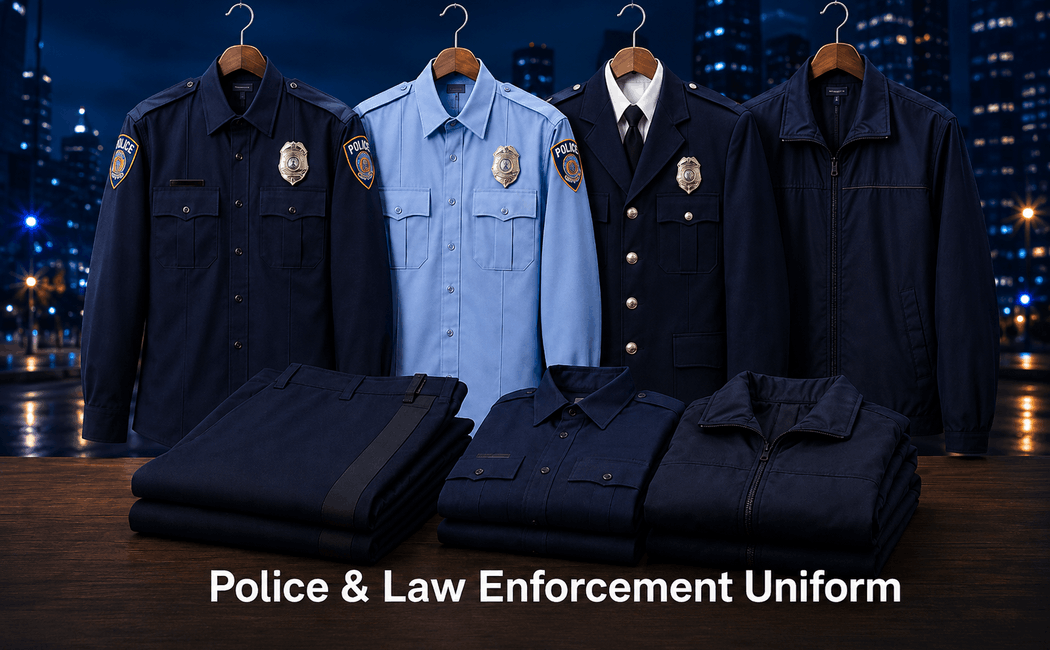
Police uniforms are designed for visibility, authority, and function. They usually include a button-up shirt, trousers, a duty belt, body armor, and patches that show the officer’s rank and department.
Most police uniforms come in dark colors like navy blue, black, or grey because these shades look professional and hide stains well. Patrol officers, traffic police, SWAT teams, and detectives all wear different versions of the uniform depending on their roles. Tactical units wear heavier gear with vests and helmets, while plainclothes officers may only wear a badge.
11. Firefighter and Emergency Services Uniform
Firefighters wear two main types of uniforms. The station uniform is the daily wear used inside the firehouse and during non-emergency duties. The turnout gear (also called bunker gear) is the protective suit worn during fires and rescues.
Turnout gear is made from fire-resistant materials like Nomex and Kevlar. It includes a jacket, trousers, helmet, gloves, hood, and boots. Reflective stripes are sewn into the suit so firefighters stay visible in smoke and low light. These uniforms meet safety standards set by groups like the National Fire Protection Association (NFPA).
12. Chef and Culinary Uniform
Chefs wear a distinct uniform that has stayed mostly the same for over 150 years. It includes a white double-breasted jacket, checkered or black trousers, a tall white hat called a toque, an apron, and a neckerchief.
The white color was traditionally a sign of cleanliness. The double-breasted jacket can be reversed quickly if it gets stained during service. The toque’s height once indicated the chef’s rank in the kitchen, with head chefs wearing the tallest hats.
Modern kitchens have moved toward more relaxed styles, but the basic uniform still signals authority and hygiene.
13. Aviation Uniform
Aviation uniforms are worn by pilots, co-pilots, flight attendants, and ground crew. Pilots wear a structured suit with shoulder epaulettes that show their rank. Four stripes means captain, three stripes means first officer, and so on.
Flight attendants wear branded uniforms designed by the airline. Many airlines hire well-known designers to create their crew outfits because the uniform is part of the brand image. Ground crew and engineers wear high-visibility vests, coveralls, or reflective jackets for safety on the runway.
Key Features of a Good Uniform
A well-designed uniform does more than cover the body. Here is what to look for when choosing or ordering uniforms for your team.
- Customization: Logos, names, and brand colors should be easy to apply through embroidery, screen printing, or sublimation. This builds brand recognition.
- Durable fabric: The cloth should handle long shifts, frequent washing, and the demands of the job. The best shirt fabrics and common materials, including cotton, polyester, twill, ripstop, and performance blends enhance durability feel, and appeal of the uniforms.
- Comfort and fit: A uniform that pinches or sags slows people down. Proper sizing, breathable material, and room for movement matter in every industry.
- Safety features: Industries like construction, firefighting, and healthcare need uniforms with reflective tape, flame resistance, or antimicrobial fabric. Always check that the uniform meets the right safety standards for your sector.
- Sustainability: More companies now use recycled polyester, organic cotton, or fair-trade-certified materials. Sustainable uniforms reduce waste and appeal to eco-conscious staff and customers.
Conclusion
Uniforms shape how we recognize roles, build trust, and run organized workplaces. From the white coat of a doctor to the camouflage of a soldier, each uniform carries meaning beyond fabric and thread.
When choosing uniforms for your team, focus on the purpose first. A good uniform fits the people, the job, and the brand behind it. Look at the fabric, the safety features, the comfort, and the way it represents your identity.
If you need uniforms for your business, school, hospital, or sports team, Mega Apparel can help you design and produce them in any quantity. We work with companies across industries to create uniforms that look good and last long.