

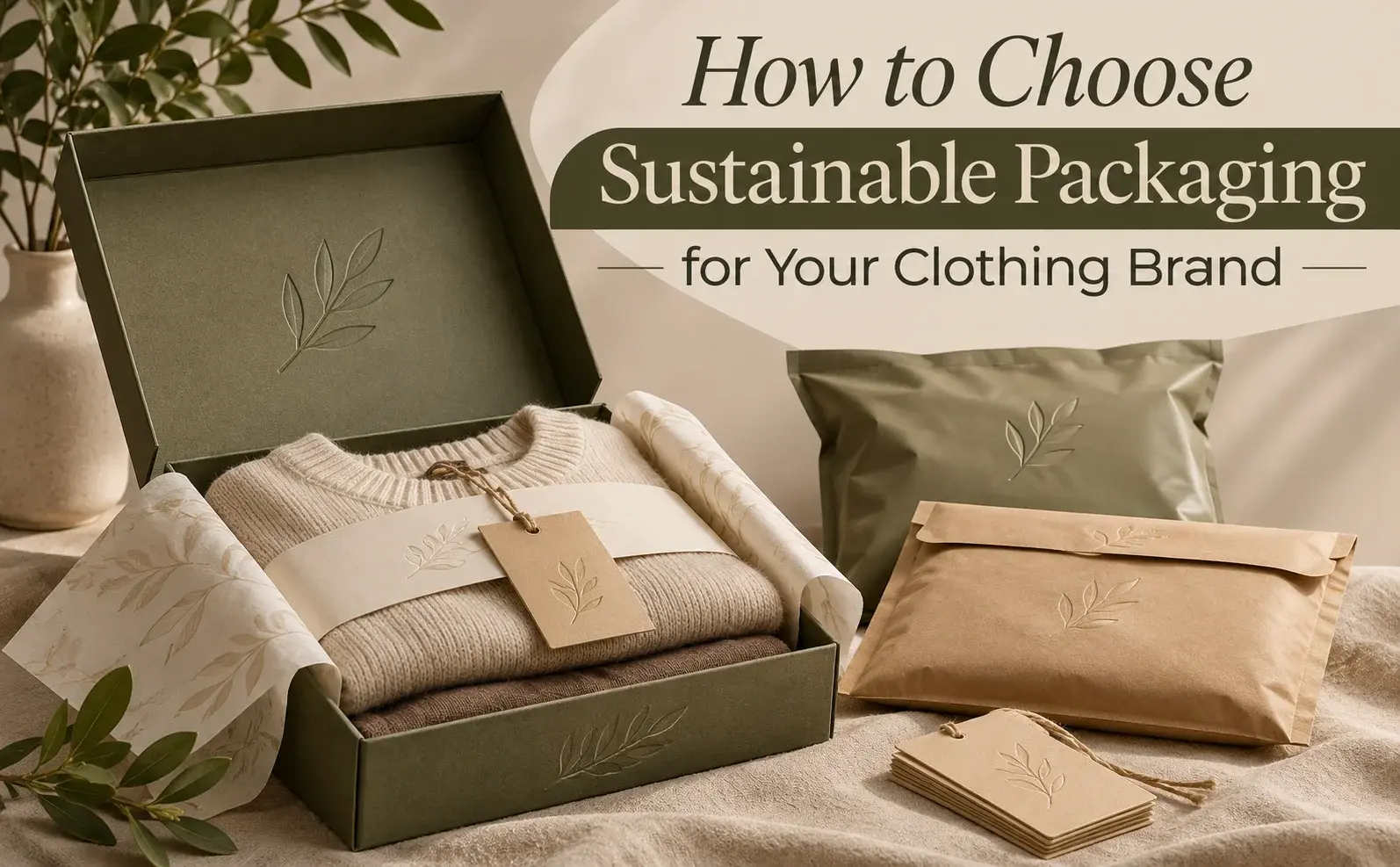
How to Choose Sustainable Packaging for Your Clothing Brand
Packaging is one of the factors of increasing unnecessary waste, which causes pollution. It is also a headache for clothing brands since the reputation of many brands and manufacturing companies can be affected. Therefore, clothing companies actively look for alternatives to pretty but dumpable packaging options. Sustainable packaging is an important consideration to reduce unnecessary waste, meet changing customer expectations, and improve product presentation. It is a suitable option for businesses since sustainable packaging utilizes fewer resources without compromising product protection and brand identity.
However, you cannot simply replace the plastic bags with paper and call it a sustainable option. Consider recyclability, durability, material sourcing, shipping requirements, production cost, and most importantly, how to reuse the packaging or dispose of it the right way.
Prefer the right packaging that can protect your products while supporting your brand’s environmental commitments.
To help you, this blog showcases various sustainable packaging options, their benefits, and the factors clothing brands should consider before choosing packaging for their products.
1. Learn What Makes Clothing Packaging Sustainable

Sustainable packaging means the packaging that reduces environmental impact throughout its lifecycle, from raw material sourcing and production to delivery, usage, and disposal.
It refers to using the packaging options that don’t require incorporating useless materials or excessive waste.
Consider the following characteristics to determine whether a packaging option is suitable or not:
- Recycled packaging made partly or entirely from recovered materials. For example, recycled paper or plastic.
- Materials that can be sourced and processed through available recycling systems.
- Packaging that can be used more than once, such as reusable fabric bags.
- Reduced material consumption, like the lightweight and appropriately sized packaging that avoids unnecessary layers.
- Materials sourced through responsible supply chains.
- Packaging that protects the garments and keeps them clean, dry, and protected during storage and transportation.
Always remember that sustainability depends on the situation. For instance, recycled paper may be appropriate for tags and apparel boxes, while a reusable garment bag is not suitable to serve the same purpose. Therefore, evaluate your packaging needs to choose the best solutions.
2. Explore Different Sustainable Packaging Materials
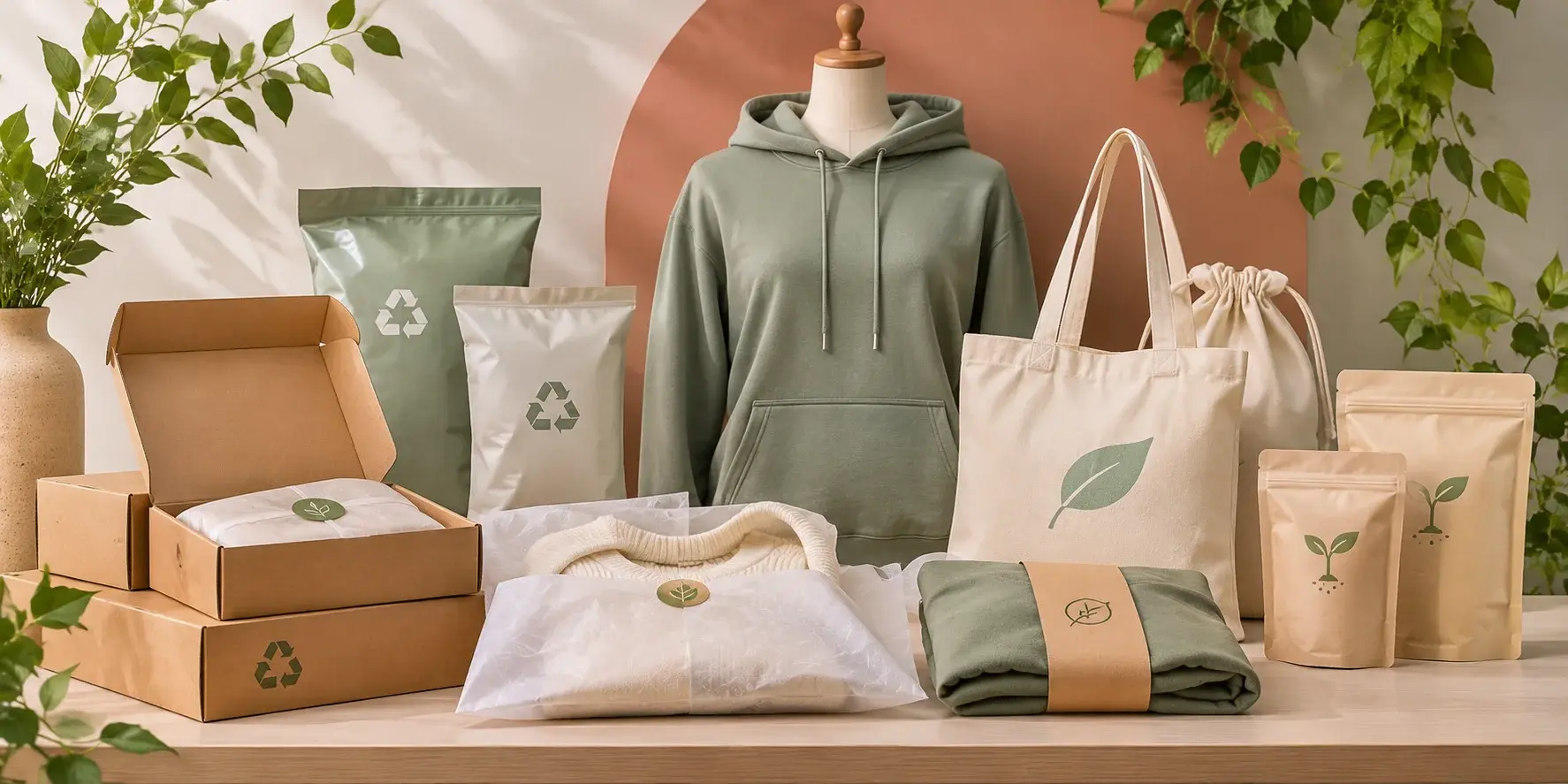
Different materials are used for different purposes, which is why brands should select the right packaging depending on what they are most useful for.
Some commonly considered materials for apparel packaging are:
Recycled Paper and Cardboard
Recycled cardboard and paper are practical options for garment boxes, product inserts, shipping cartons, paper wrapping, and hang tags.
- Corrugated cardboard shipping boxes.
- Recycled paper garment tags.
- Paper wrapping for individual clothing items.
- Kraft paper shopping bags.
- Product information cards
- Product packaging inserts.
Ask your suppliers about the recycled content percentages and other relevant certifications. FCS-certified paper products can provide information about forest-based sourcing, as per the specific certification claim.
Recycled Poly Mailers
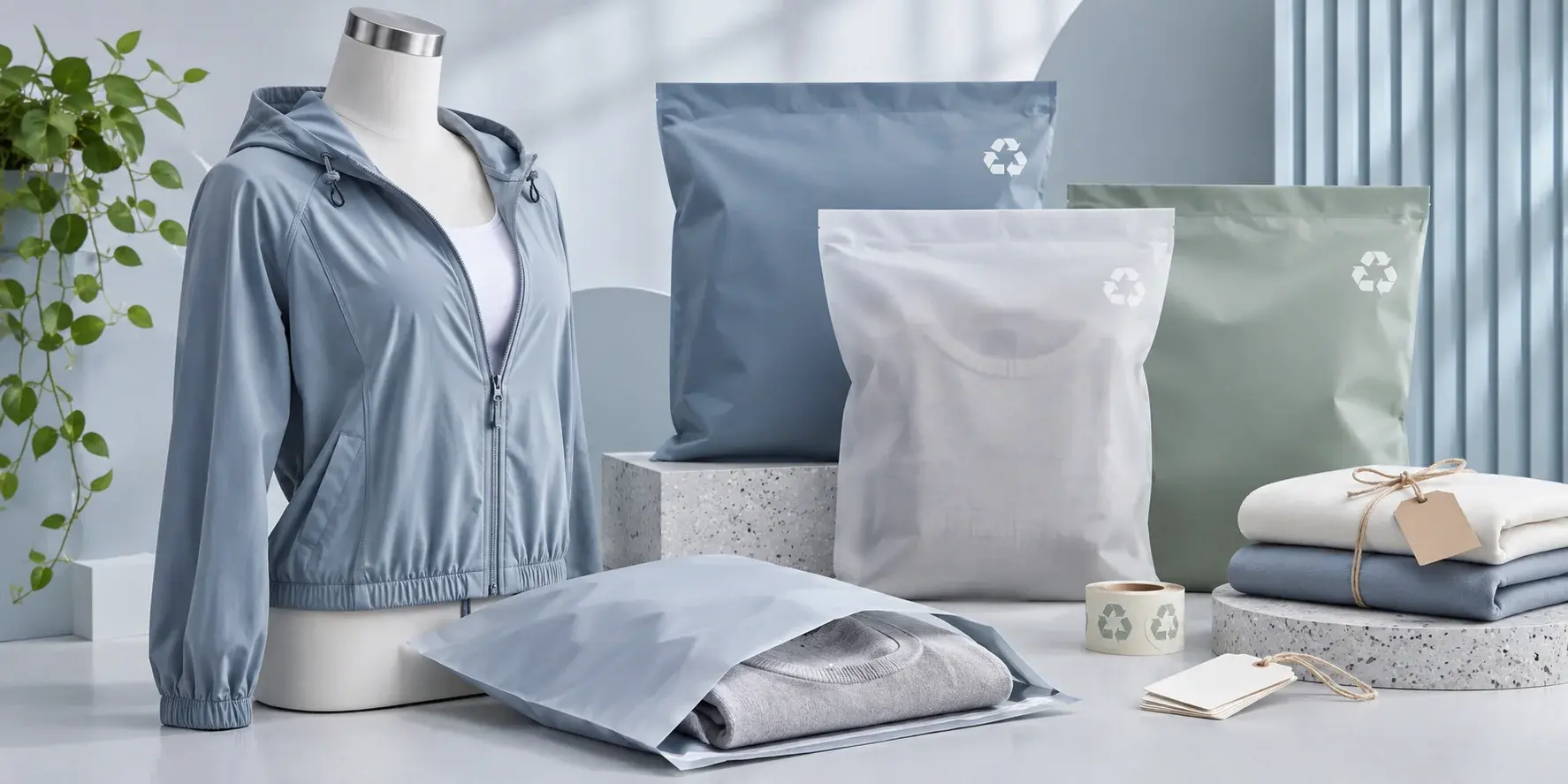
Recycled poly mailers are made with recycled plastic content. They are lightweight shipping bags commonly used by e-commerce stores and clothing brands that transport individual orders. The lightweight construction also helps in decreasing the shipping weight.
The designs are flexible, making them suitable for the following packaging of garments:
- T-shirts
- Tops
- Leggings
- Activewear.
- Sleepwear sets and pajamas
- Loungewear and nightwear.
- Lightweight clothing accessories.
Clothing brands must check the PCR (post-consumer recycled) content, and if the mailer can be recycled through facilities accessible to their consumers.
Organic and Reusable Fabric Bags

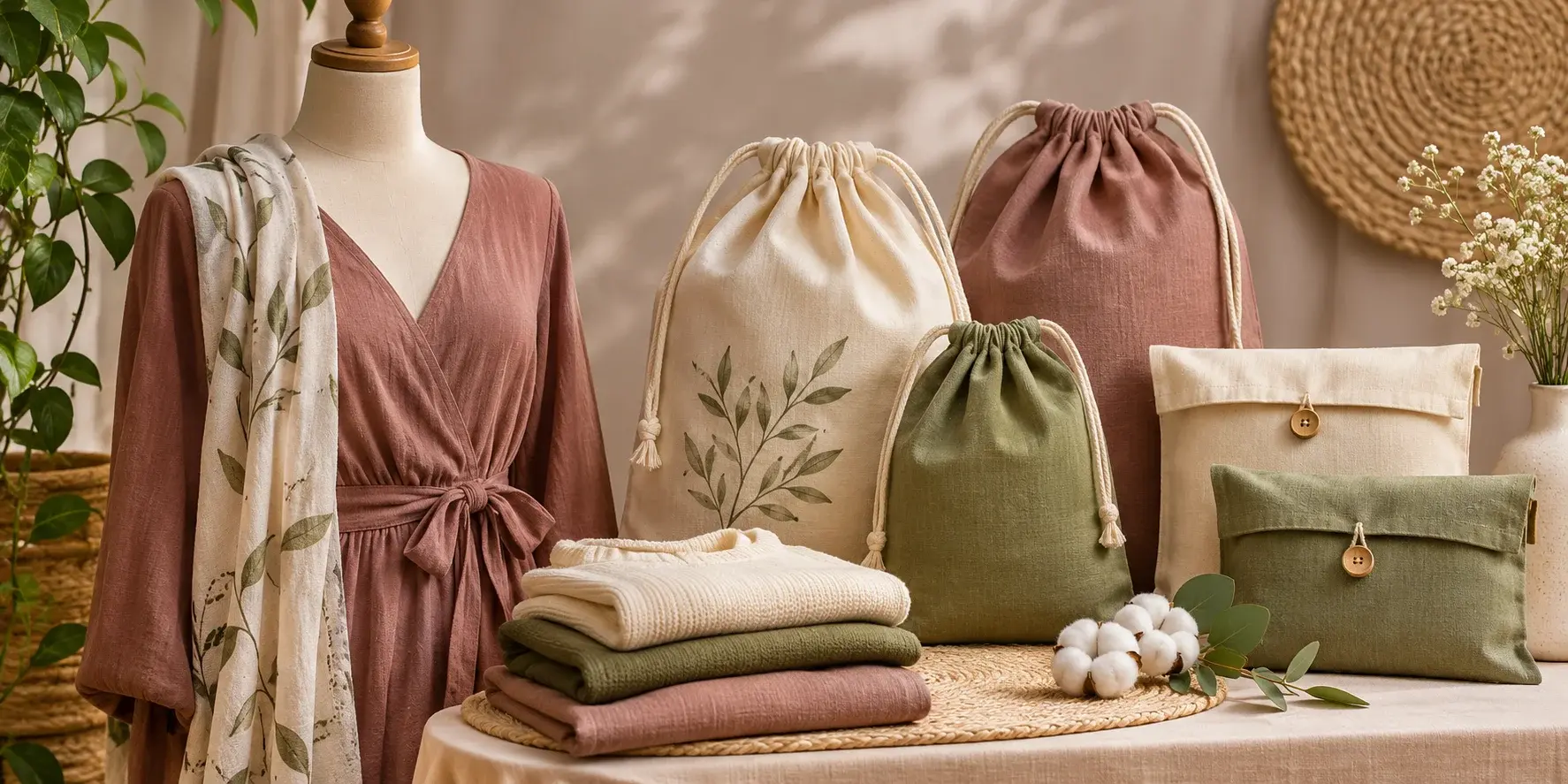
Organic and reusable fabric bags serve clothing brands by providing their customers with premium packaging for multiple purposes.
Certain options like drawstring pouches Cotton bags, drawstring pouches, and reusable garment bags can be used for product storage, travel, and everyday organization.
For example, a sleepwear brand could package a pajama set in a reusable drawstring bag, allowing customers to use it later for storing nightwear or travel essentials.
However, reusable fabric packaging should be evaluated carefully. Its environmental benefits depend on factors such as fabric production, durability, transportation, and how frequently customers reuse it.
Consider fabric weight, stitching quality, material sourcing, and washing requirements before placing a large order.
Compostable Packaging

This helps in breaking down under specified composting conditions. Some brands consider compostable mailers as an alternative to conventional plastic packaging.
Verify the following factors before choosing compostable packaging:
- The packaging is certified compostable.
- The certification covers the specific components or complete packaging.
- The packaging requires home or industrial composting.
- The suitable composting facilities are accessible to customers.
- The labels, adhesives, and other components affect disposal.
Reusable and Recyclable Cardboard Boxes

Cardboard boxes are appropriate for transporting various garments, wholesale apparel, high-quality clothes, and subscription orders.
Fashion and private labels can select the right sizes of bozes with recycled content and design them for using more than once.
Selecting the correct box dimensions is crucial for e-commerce brands to overcome empty spaces.
Designs with removable labels and minimal printing can make packaging easier to process after use.
3. Consider Practical Apparel Packaging Ideas

Packaging determines the customer’s buying experience, and sustainable packaging can reflect the type of clothing being sold. When both are combined, they fulfill the requirements of the distribution process and customer satisfaction.
Moreover, certain apparel categories may need different packaging formats.
Explore some practical garment packaging ideas for clothing businesses.
Packaging for Pajamas and Sleepwear
Pajamas and sleepwear sets are often sold as coordinated products, making presentation and organized storage important.
Brands can consider:
- Recycled paper boxes for premium pajama sets.
- Reusable fabric pouches for individual sleepwear collections.
- Recycled paper belly bands around folded garments.
- Minimalist product tags with care and material information.
For premium bedtime clothing, a reusable pouch can provide additional storage value without requiring elaborate decorative packaging.
Packaging for Loungewear and Homewear
Daily comfortable wear is the heart of the loungewear and homewear collection that includes relaxed tops, matching sets, and lounge pants.
For packaging, the best options are as follows:
- Paper covers
- Cardboard boxes
- Reusable fabric bags
- Recycled poly mailers
Excessive separate wrappings must be avoided for brands working with bulk orders to keep the garments organized.
Packaging for Nightwear Collections

Nightwear products have a variety of ranges for products like robes, pajama sets, night dresses, and many other bedtime wear.
One needs to make a wise choice with packaging to keep the presentation organized via the following:
- Recycled paper garment boxes.
- Minimalist printed tags.
- Reusable drawstring bags.
- Paper-based product inserts.
The retail positioning, construction, and fabric of the garment need to be considered for packaging.
4. Evaluate Packaging Based on Product Protection

Product quality should never be compromised while considering the environment.
Storage and transportation may expose the clothing to dust, moisture, handling, and compression. Throughout the supply chain, keen protection is needed for packaging.
The following elements must be inquired about thoroughly before approval of the packaging material:
Moisture resistance: Are the garments safe from humidity or any sort of exposure during shipping?
Durability: Is it strong enough to hold handling and transportation without damage?
Product compatibility: Does the material go hand in hand with the weight, finishing, and dimensions of the fabric?
Shipping conditions: The packaging must remain safe during transportation, whether international or domestic.
Storage requirements: The clothes must not be harmed during storage at the warehouse or during tasks at inventory. One may use a paper bag for inner retail packing, but it won’t be sufficient as an outer protective layer for international shipping.
To avoid unnecessary layers of materials, the brands can use inner packaging and a protective outer mailer together for safe shipping.
In such cases, brands can combine suitable inner packaging with a protective outer mailer or shipping box while avoiding unnecessary material layers.
5. Balance Packaging Costs with Your Business Requirements

Packaging choices have a direct impact on the cost of the product, order fulfillment, and shipping costs.
Choosing sustainable packing for start-up and expanding apparel companies must take into account practical minimum order quantities, material availability, customization costs, and production needs.
Take these factors into account in terms of cost:
Material cost: The cost of material may vary by type of recycled, certified, or specialty material.
Min. order quantities: Minimum quantities for custom printing and packaging production.
Customization: Logos, color, labels, and finishes may add to manufacturing costs.
Storage: Bulky packaging may take up more storage space in the warehouse.
Shipping: Dimensions and weight of packaging may affect shipping costs.
Product protection: Packaging that breaks during transit can result in damage to products, replacement costs, and extra expenses.
Ask various packaging companies for estimates, and don’t just consider the price per box or bag.
Small brands can begin with basic packaging that is recycled and minimal branding to control initial investment.
Once orders start to rise, companies can investigate custom packaging choices so as to more perfectly mirror their brand.
6. Choose Packaging That Reflects Your Brand Identity

Packaging plays a vital role in the customer experience. It’s frequently the initial physical encounter a customer might have with an online clothing brand.
Sustainable packaging can complement brand positioning if the packaging’s look, substance, and messaging align with the brand’s products.
An upscale sleepwear company, for instance, could opt to use simple recycled paper boxes, brown or grey tones, and cloth boxes that can be used several times. Lightweight recycled mailers with simple printed labels may be a better choice for an everyday loungewear label.
Here are some things to keep in mind when creating packaging:
Branding: Use logos, but don’t overprint.
Consistent color schemes: A consistent color scheme reflecting your clothing collections.
Typography: Use easy-to-read lettering for product information and packaging directions.
Finishes: Choose finishes that are appropriate to the packaging material and do not make recycling more difficult.
Product information: Providing relevant product information like the way the garment needs to be cared for, its composition, and brand information.
Many professional package designs do not involve several layers, fancy finishing, or fancy accessories. A simple and functional design can convey brand identity.
7. Check Supplier Credentials and Material Certifications

The selection of packaging suppliers is as crucial as the packaging materials, and it is important to opt for the right packaging supplier.
A supplier should be able to give an explanation of the source of materials, what they are made of, and how the environmental claims are supported.
When assessing suppliers, make sure to request:
Material specifications: Verification of material composition and material percentage of recycled content / other claimed materials.
Applicable certificates: Ask for relevant certificates (e.g., FSC certificate for eligible paper products or certification in compostability).
Production information: Know the production process of packaging and the ability to customize it. Check packaging samples for strength, size, print, and general finish.
Production Capacity: Check if the supplier is capable of consistently maintaining the same quality in the production of your orders.
MOQs & Lead Times: Get to know the minimum order quantities, sampling lead times & bulk production lead times.
Certifications should be evaluated against the actual supplier, product, and claim. Not all packaging products supplied by a supplier are automatically certified. If a supplier has one environmental certification, it does not automatically mean that all products that are supplied to the market are also certified.
From the supplier side, transparency can enhance the confidence of brands in preventing false labels or inconsistent material quality.
8. Avoid Misleading Sustainable Packaging Claims
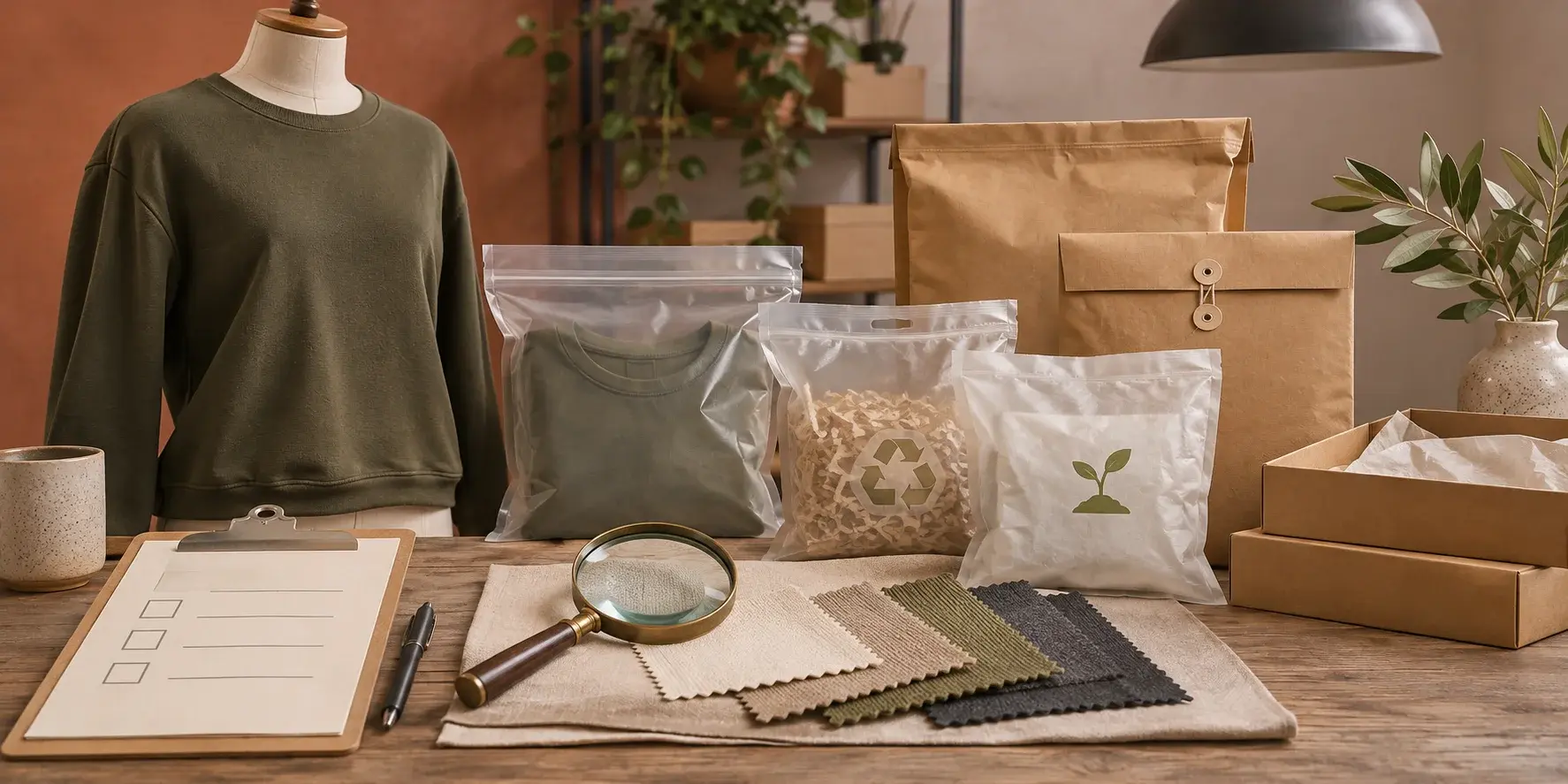
While the adoption of sustainable packaging is a good step, there is a need to accurately communicate the environmental benefits of this.
Brands need to be careful with general statements like “100% eco-friendly,” “completely green,” or “zero impact on the environment” because these types of claims need to be backed up by what they mean.
Instead, use specific and concrete descriptions.
For example:
- 80% recycled from post-consumer waste.
- Packaging made with FSC-certified paper.
- Designed to be reused and made from recycled fabric.
- Can be used for industrial composting if facilities are available.
These descriptions provide consumers with a better idea of the material and its environmental attributes.
According to the US Federal Trade Commission Guidelines on “Green Guides” in Environmental Marketing, environmental marketing claims should be specific, clear, and backed by reliable information. Likewise, the UK’s Green Claims Code highlights the need for businesses to support environmental claims and to not make false impressions.
International brands should also check for relevant packaging and environmentally friendly marketing regulations in their markets.
The European Union’s Packaging and Packaging Waste Regulation (EU) 2025/40, for instance, will come into effect on August 12, 2026, and will include provisions on packaging design, waste prevention, recyclability, and more.
Knowing these requirements can help businesses make informed packaging choices when expanding their business to the international market.
9. Build a Practical Sustainable Packaging Strategy

Clothing brands don’t need to replace all the packaging at once but can make improvements over time.
A systematic method allows costs, product protection, and consumer response to be more readily assessed.
Step 1: Take a look at what you are now using for your packaging.
Be sure to know everything you’re using in your packaging, such as shipping bags, boxes, tissue paper, tags, labels, and inserts.
Step 2: Cut away any surplus materials.
Identify the materials that are not needed; Seek over-packaging, too-large boxes, unnecessary packages, and fancy elements with no use.
Step 3: Explore other materials.
Compare recycled paper, cardboard, recycled poly mailers, reusables (cloth bags), and certified compostables according to use.
Step 4: Request ad test samples.
Examine the material, size, print quality, waterproofness, and fit of your clothes.
Step 5: Determine the total packaging cost.
Add the cost of materials, customization, storage, shipping, and minimum order quantities.
Step 6: Check customer disposal options
Ensure packaging instructions are accurate to the facilities available for recycling, reusing, or composting in your target markets.
Step 7: Monitor performance
Monitor packaging expenses, product damage, customer comments, and material consumption. Apply this knowledge to make future packaging decisions.
This progressive change process enables businesses to make practical changes without impacting the current business process.
Conclusion
When it comes to packaging solutions for your clothing brand, there are a number of considerations you’ll need to make, including environmental impact, protection of your product, presentation, and business costs. Several alternatives can help apparel businesses reimagine how products are packaged and delivered, such as recycled paper boxes and recycled poly mailers and reusable fabric bags.
The best way to do this is to choose materials that have the properties required for the product, verify what the supplier claims, avoid unnecessary packaging, and take into account the entire product lifecycle from material production to the customer.
When creating a line of clothing, another benefit of working with a seasoned apparel manufacturing partner is that they’ll be able to assist you with the garment production, packaging requirements, and private label needs.
Explore sustainable clothing manufacturing solutions to learn more about developing clothing collections with responsible material and production considerations.