
.webp)
Fishing Apparel Manufacturers Building UPF Shirts Made for the Water
A fishing shirt spends eight hours in direct sun, reflected glare off the water, salt spray, and fish slime, and it is expected to feel cool at the end of it. That is a performance brief, not a fashion one, and it is why custom fishing shirts are built differently from an ordinary polyester tee.
Mega Apparel is a sports apparel manufacturer producing custom-made fishing shirts for outdoor brands, fishing tournaments, charter operators, marinas, and tackle companies. We have been manufacturing since 2012; more than 2,000 clients have run production through our factory, and we start at 50 pieces per design.
What a Fishing Shirt Has to Handle on the Water
Every feature on a good fishing shirt answers a specific problem an angler has on the boat. If a feature does not solve one of these, it is decoration.
- Hours of direct and reflected UV: Fabric tested for UPF 50+, with long sleeves, hoods, and neck gaiters for full coverage.
- Heat and humidity: A vented cape back with mesh lining, mesh underarm panels, and light colors that absorb less heat.
- Sweat and spray: Moisture-wicking polyester or nylon that dries in minutes rather than hours.
- Fish slime, blood, and bait: A stain-release finish and antimicrobial odor control, so the shirt still smells clean on day two.
- Hooks, lures, and rod guides: A tight-knit or ripstop weave that resists snags and pulled threads.
- Casting and fighting a fish: Raglan sleeves or gusseted underarms, so the shoulder moves freely without the hem riding up.
- Tools and small gear: Chest pockets with hook and loop or button closures, a rod holder loop, and a sunglass wipe.
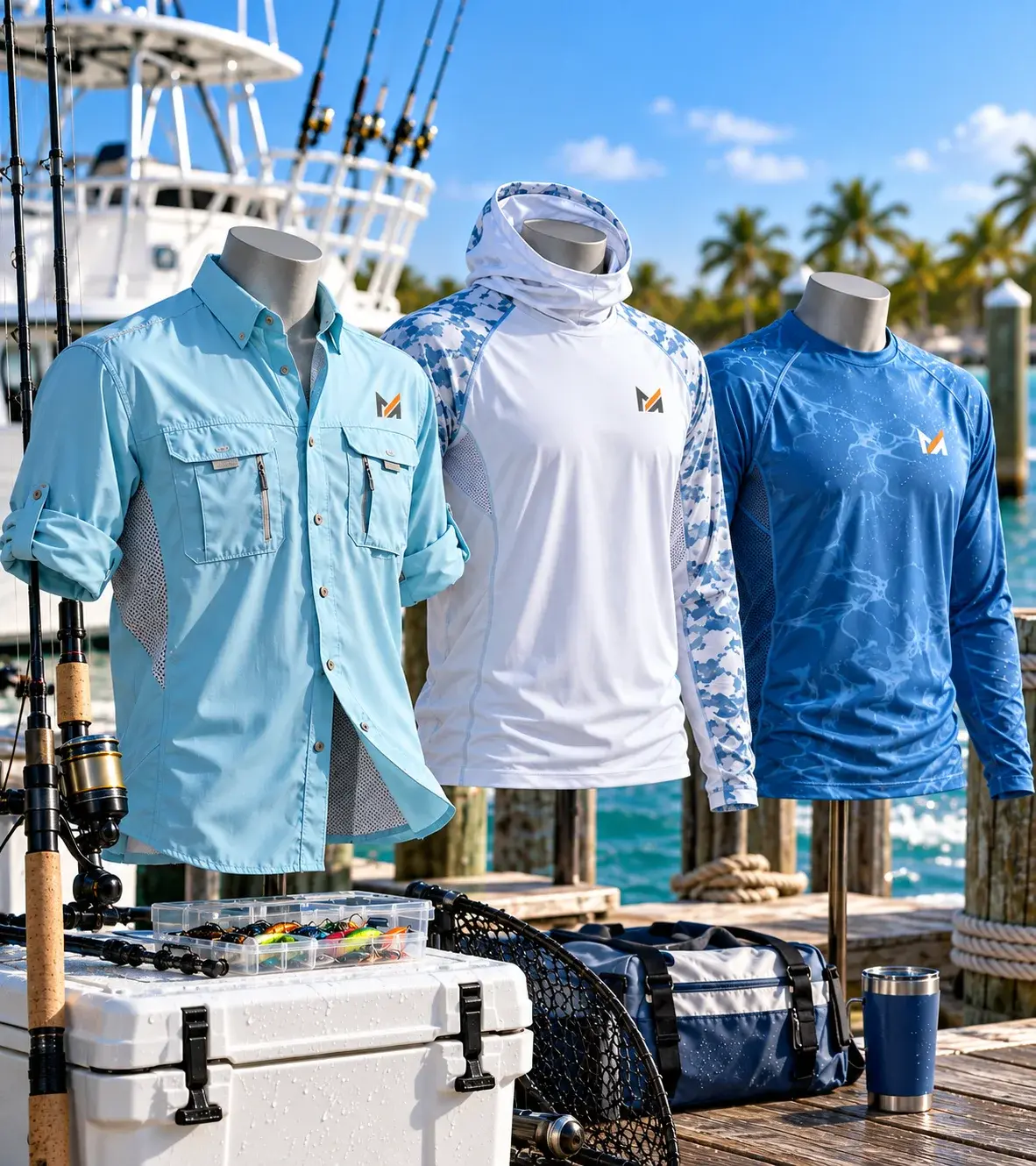
Custom Fishing Shirts We Manufacture
Vented Button-Down Fishing Shirts
.webp)
The classic guide shirt. Lightweight nylon or polyester woven with a vented cape back, button-down collar, two chest pockets, roll-up sleeve tabs, and a rod holder loop.
Hooded Sun Shirts
.webp)
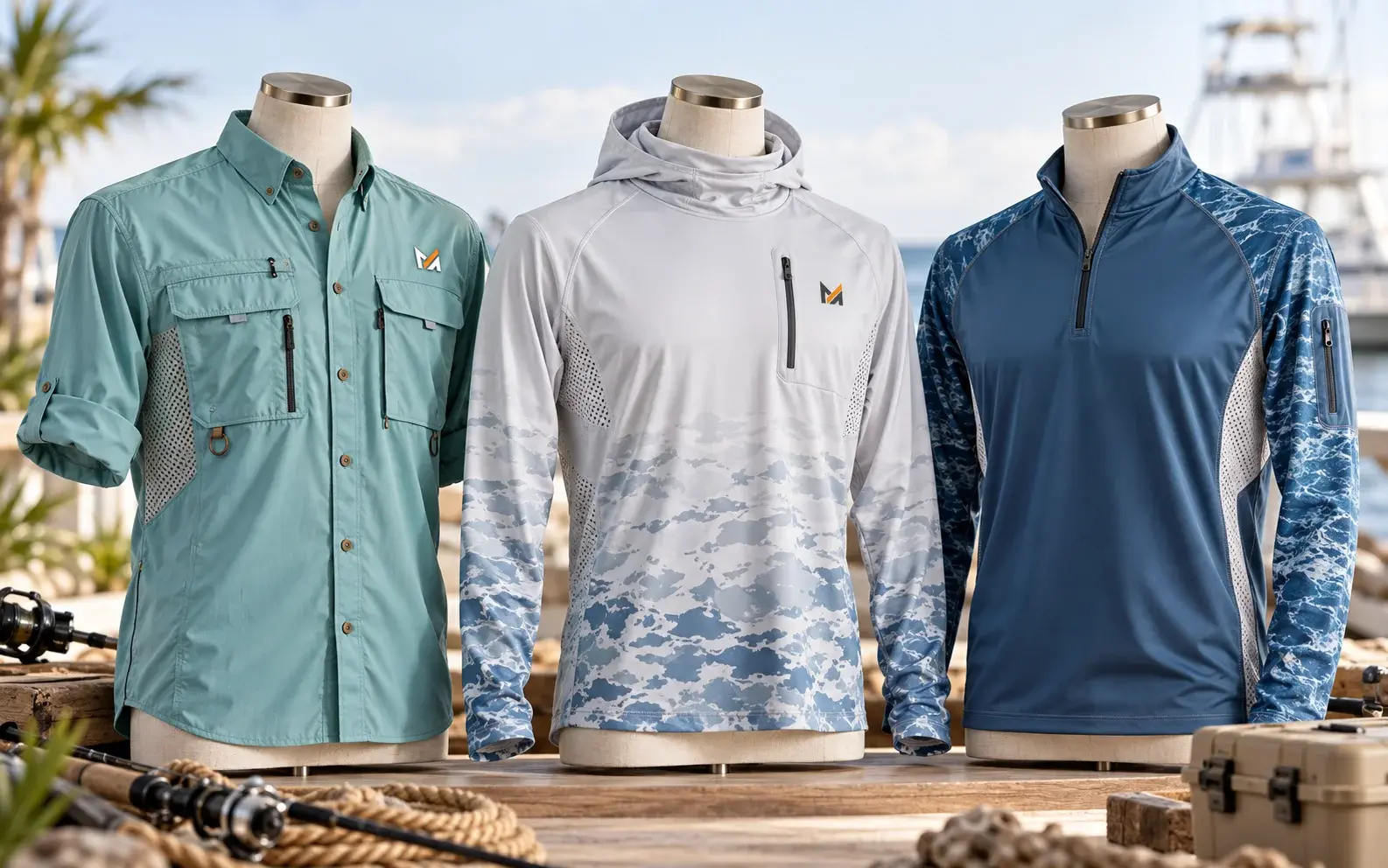
The best seller in this category. Long-sleeve performance knit with a fitted hood, thumb loops, and an optional built-in neck gaiter for full coverage on offshore days.
Long-Sleeve Performance Fishing Shirts
.webp)
Crew neck polyester knit around 120 to 160 GSM, moisture wicking and UPF tested, and the easiest base for full sublimated artwork.
Short-Sleeve Performance Tees
.webp)
The same fabric in a short-sleeve cut for freshwater days, shore fishing, and retail merchandise.
Tournament Fishing Jerseys
.webp)
Fully sublimated shirts carrying sponsor logos on the sleeves, chest, and back, with angler and boat names added per shirt.
Fishing Polo Shirts
.webp)
Performance pique polos with UPF fabric for charter crews, marina staff, lodge teams, and tournament officials.
Performance Fishing Hoodies
.webp)
Lightweight polyester hoodies for cool mornings on the water, with a kangaroo or zip pocket and the same sublimation options as the shirts.
Women's Fishing Shirts
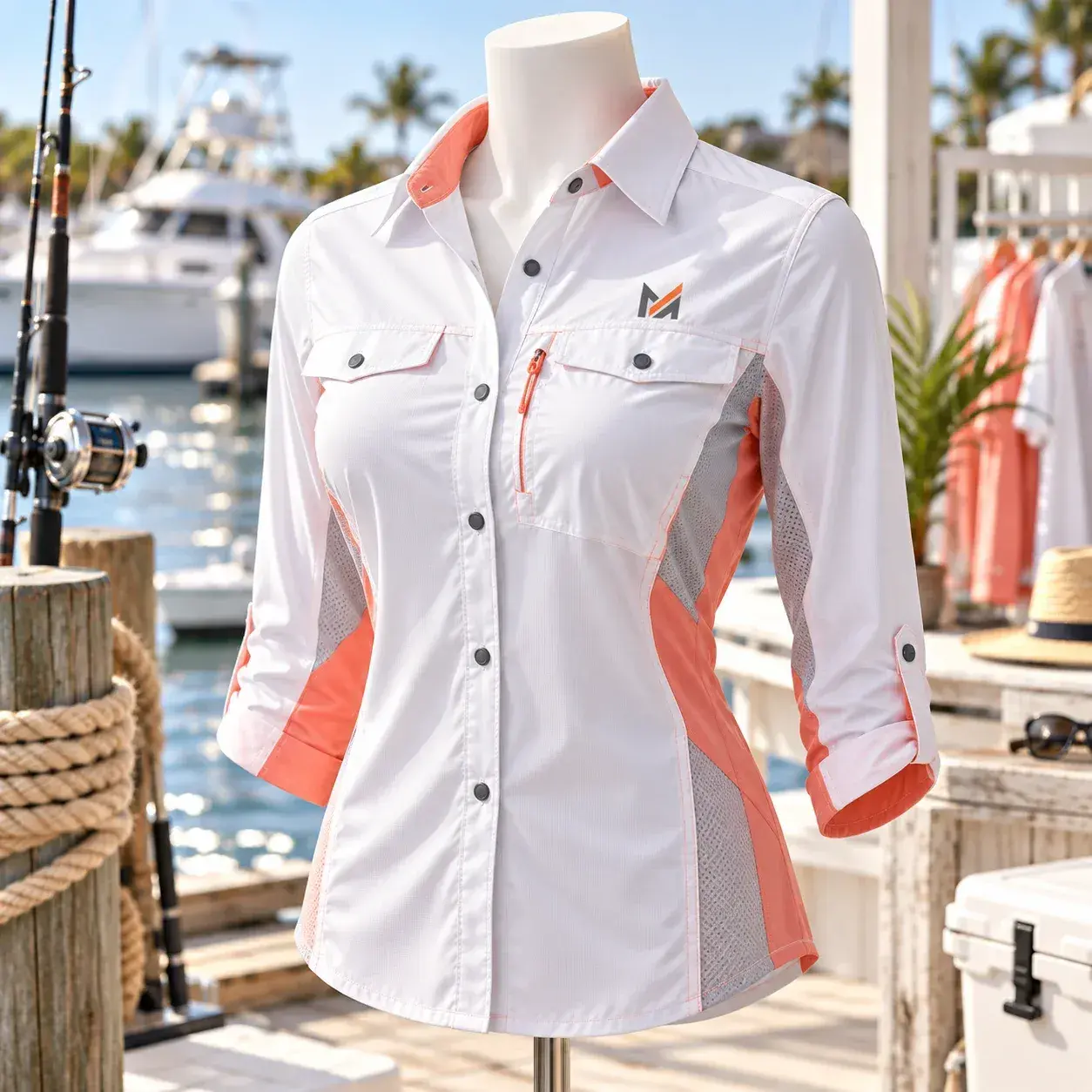
Cut on a separate block rather than a resized men's pattern, with a shaped side seam, adjusted shoulders, and a hood that sits properly.
Youth Fishing Shirts
.webp)
Kids and youth sizes for family fishing brands, youth clubs, and junior tournaments, built to the US safety rules for children's apparel, including no drawstrings at the hood or neck on regulated sizes.
Neck Gaiters and Sun Sleeves
.webp)
Made from the same UPF fabric and printed to match, so a full kit ships together in one carton.
UPF 50+: How the Rating Is Earned, Not Just Printed
UPF stands for Ultraviolet Protection Factor, and it measures how much UV radiation passes through a fabric. A UPF 50 fabric lets through about one fiftieth of the UV that reaches it, which is roughly two percent. Most fishing shirt buyers ask for UPF 50+ because anglers are exposed for longer and more intensely than almost any other outdoor customer.
In the United States the rating is built on three documents. AATCC Test Method 183 measures UV transmission through the fabric. ASTM D6544 covers how the sample is prepared before testing, including simulated laundering, so the result reflects a garment that has been worn and washed rather than one straight off the roll. ASTM D6603 sets out how the result is labelled.
| UPF value | Protection category | Share of UV blocked |
|---|---|---|
| 15 to 24 | Good | About 93 to 96 percent |
| 25 to 39 | Very good | About 96 to 97.4 percent |
| 40 to 50+ | Excellent | About 97.5 percent or more |
Labels are given in steps of five and stop at 50+. A fabric that measures 80 in the lab is still labelled UPF 50+, so a higher number on a competitor's label usually means nothing extra.
What actually drives the rating is the fabric itself: the fiber, how tightly it is knitted or woven, the weight, the dye, and whether a UV absorber has been added. Polyester blocks UV well on its own, which is one reason it dominates this category. Protection can drop when fabric is stretched tight or soaked, so fit matters as much as the number.
Here is how we handle it. Fabric for UPF programs is sourced with AATCC 183 test reports, and we can arrange third-party testing on your finished garment when you need a report in your own name. Any UPF number printed on your label, hang tag, or product listing is a performance claim, so keep that report on file. We will not print a rating on a shirt that has not been tested for it.
Built for the Kind of Fishing Your Customer Does
A shirt that works on a bass boat in Alabama is not the best shirt for a day chasing marlin forty miles offshore. Offshore anglers face full day sun, glare, and spray, so they need a hooded sun shirt in UPF 50+ knit with a neck gaiter. Inshore and flats anglers stand in the heat sight fishing, which calls for light colors, a vented back, and a lightweight weave.
Bass tournament teams care most about sponsor visibility, so their shirts are sublimated jerseys with names and numbers. Fly anglers need casting freedom and pockets for small gear, while kayak anglers need a close-fitting, fast-drying knit with raglan sleeves that sits comfortably under a PFD. Tell us who your customer is and where they fish, and we will build the shirt around it.
Fabrics and Performance Finishes
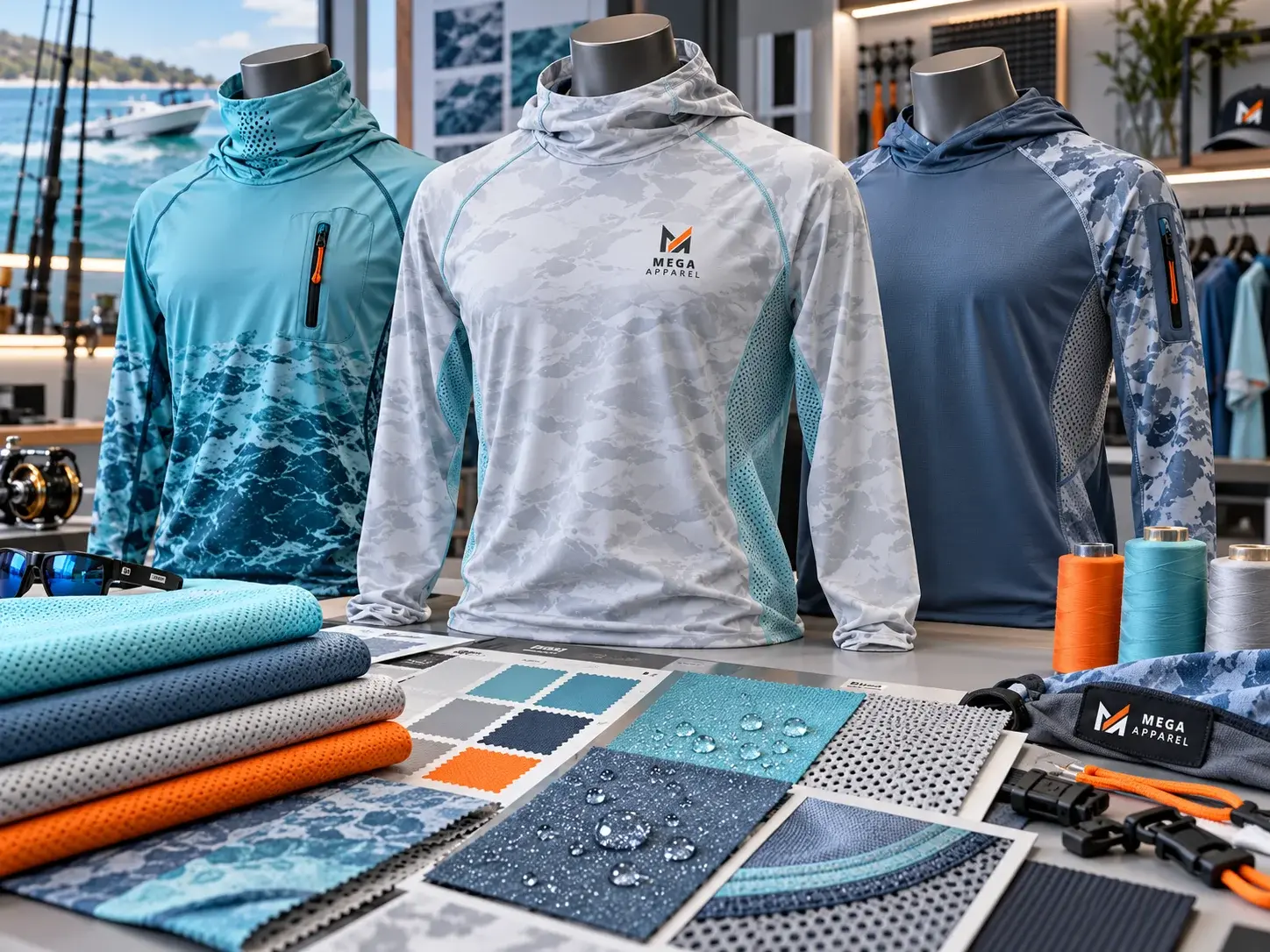
Cotton is out for serious fishing shirts. It absorbs water, stays heavy, and loses UV protection when wet. Polyester jersey and interlock are the base for hooded sun shirts and performance tees, because polyester blocks UV well on its own, wicks fast, and takes sublimation. Adding spandex gives fitted and women's styles the stretch they need for casting. Vented button-down shirts are made in nylon woven or ripstop, which is light, snag-resistant, and quick to dry, while polos use polyester pique for its breathable texture and clean embroidery.
Recycled polyester performs the same as virgin polyester and suits sustainability programs, with GRS-certified stock available. Bamboo and polyester blends give retail lines a very soft hand, but their UPF depends on the final fabric, so we test it before it is claimed.
Finishes applied on request: UV absorber for UPF, moisture wicking, quick dry, antimicrobial odor control, stain release, cooling finish, and water repellent for woven shells. Colors are matched to Pantone TCX references and held on file for reorders.
Why Most Custom Fishing Shirts Are Light Colored
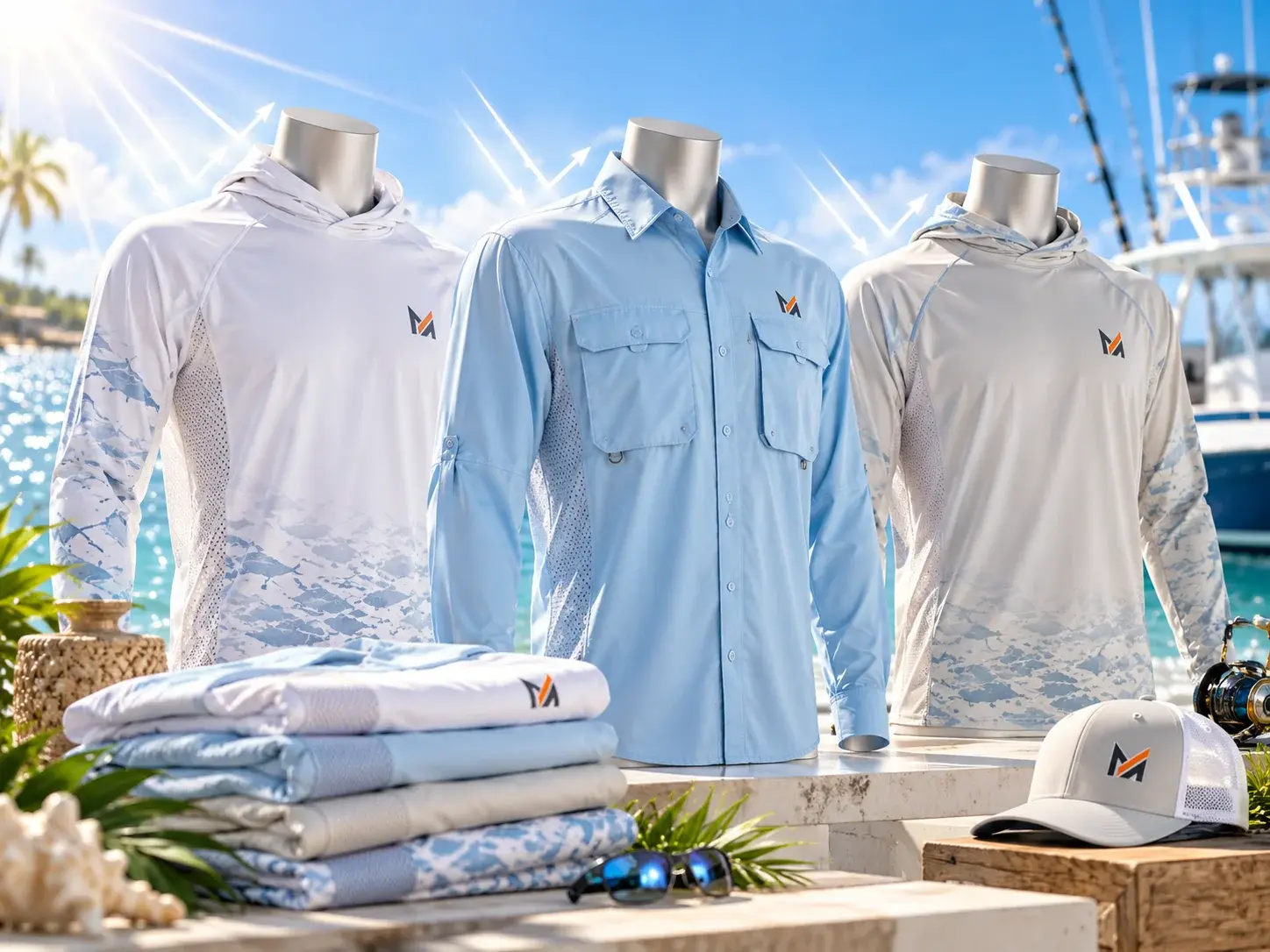
Dye sublimation is the standard for fishing shirts because the ink turns to gas and bonds into the polyester fiber. There is no layer sitting on top of the fabric, so the shirt stays as breathable and as light as it was before printing, and the graphic cannot crack or peel. That makes it ideal for full-species artwork and crowded sponsor layouts.
The limit is color. Sublimation cannot print white, and it only shows properly on white or light polyester. That is the real reason tournament shirts are pale blue, grey, and white, and it suits anglers anyway, because lighter shirts absorb less heat in the sun.
If you want a dark shirt, the options are DTF transfers, screen printing, or cut and sew color panels built into the pattern. We will tell you which one suits your artwork before sampling. Other decorations we run in-house:
- Embroidery on polos and button-down chest pockets.
- Silicone and TPU badges for premium retail lines.
- Heat applied names and boat names for individual shirts.
- Woven patches and custom zipper pulls on hoodies.
.webp)
Tournament, Charter, and Crew Programmes
Most fishing shirt orders are not retail drops. They are programmes that come back every season, and each type of buyer needs something slightly different from a fishing shirt supplier.
- Fishing tournaments: Sponsor logos placed by tier, the target species on the back, and angler and boat names on individual shirts. The artwork changes every year, so we keep your layout on file and swap only what has changed.
- Charter operators, guides, and lodges: Staff shirts that double as retail stock for guests, usually a hooded sun shirt and a polo in the same colorway.
- Marinas, bait and tackle shops: Retail merchandise with a local species or place name, in mixed styles and sizes within one order.
- Marine, tackle, and boat brands: Private label performance shirts sold alongside your products or used as dealer and trade show apparel.
- Fishing clubs and school fishing teams: Matching team jerseys across a full adult and youth size range.
What Makes the Best Fishing Apparel Factory?
If you are comparing suppliers, these are the questions that separate a real Best Fishing Apparel Factory from a reseller with a catalogue.
Can they show an AATCC 183 test report for the fabric behind the UPF claim?
- Do they sublimate in-house, or send your shirts to a third party?
- Do they build vented backs, hoods, and gaiters into the pattern, or add them to a blank?
- Will they keep your artwork and color recipe on file so next season matches this one?
- Is the minimum low enough to test a design before you commit to a full run?
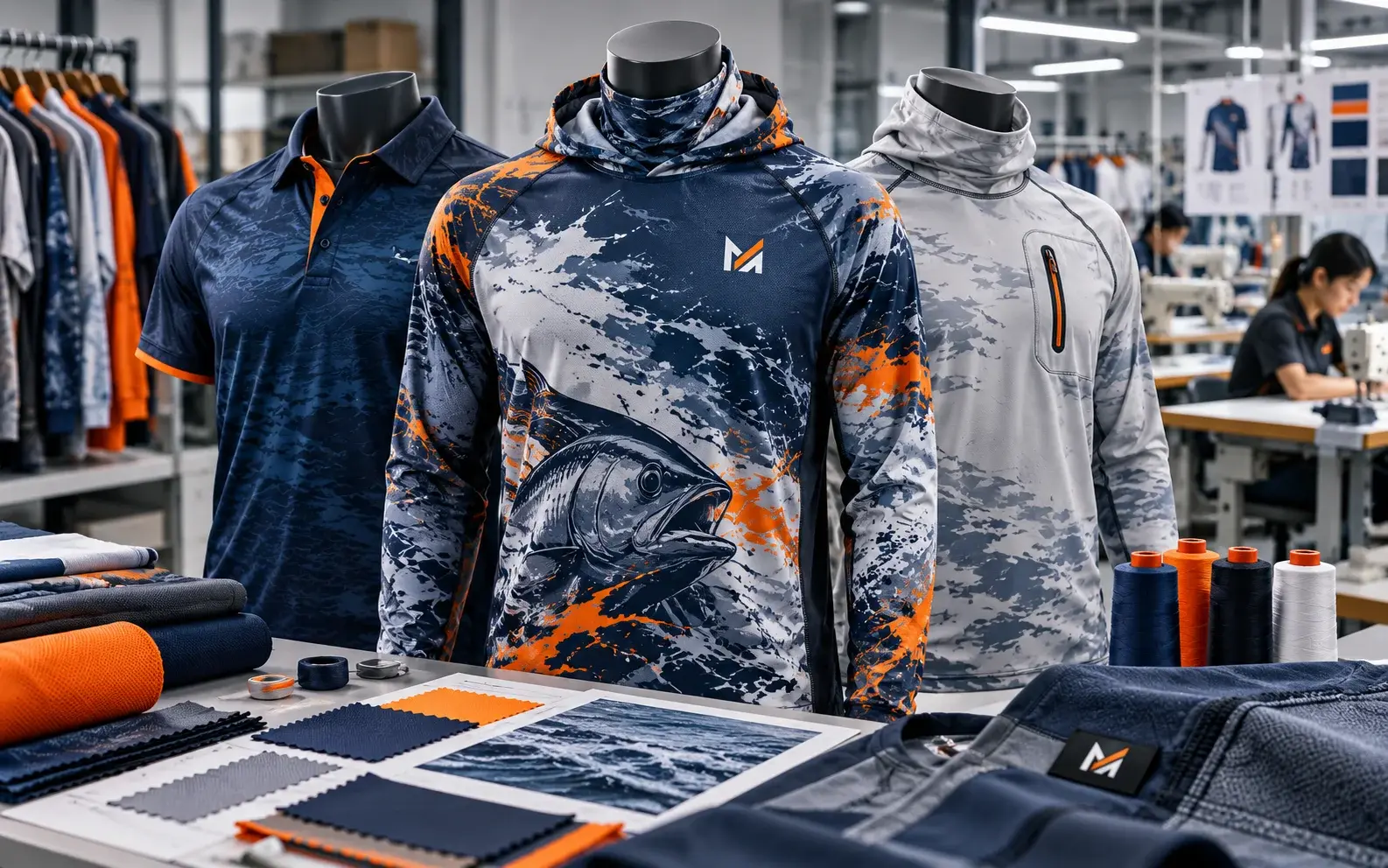
We can answer yes to all five, and we will send the evidence with your quote. Our fishing apparel manufacturing process includes fabric sourcing, pattern development, sample approval, grading, bulk production, and final quality inspection.
.webp)
Private Label and Packaging
Every order ships under your brand. Nothing on the shirt or in the carton points back to us.
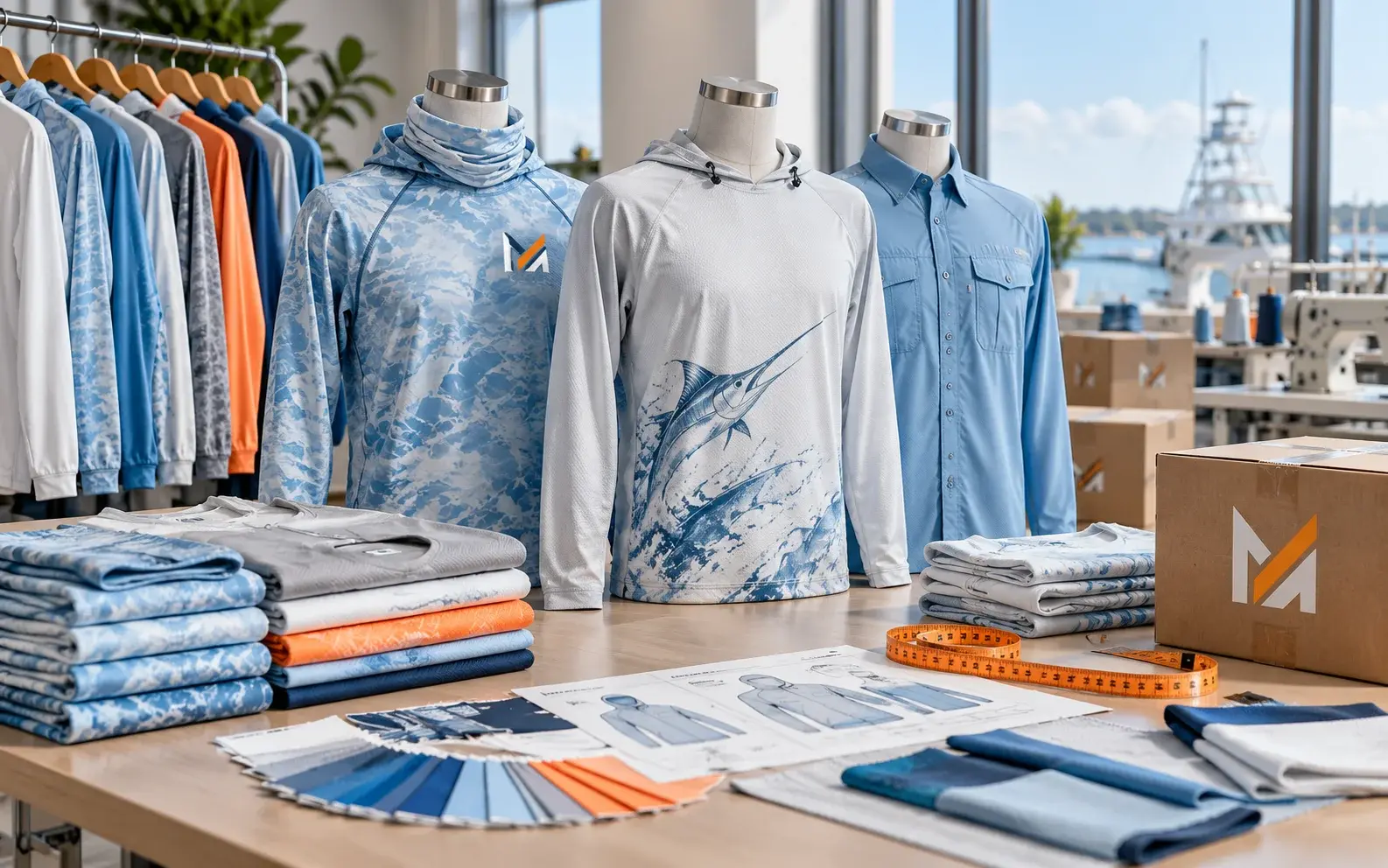
We use tagless heat transfer neck labels as standard on performance shirts, because a stitched label rubs on a sweating neck. Care and content labels carry fiber content, country of origin, and care symbols in the format US retail expects, plus your RN number if you have one. Hang tags can show the UPF rating once the garment has been tested. Branded poly bags, custom mailers, and UPC barcodes applied per unit are all available.
Minimums, Lead Times, and Pricing
- Minimum of 50 pieces per design, with sizes and styles mixed within it.
- Reorders of an unchanged design from a lower minimum.
- Sampling in 10 to 15 business days from approved artwork.
Bulk production in 15 to 20 business days after sample approval.
For a spring tournament, samples should start in early winter. Your unit price moves with fabric, construction features such as vented backs and hoods, print coverage, quantity, and whether your date needs air freight.
How We Check Every Order
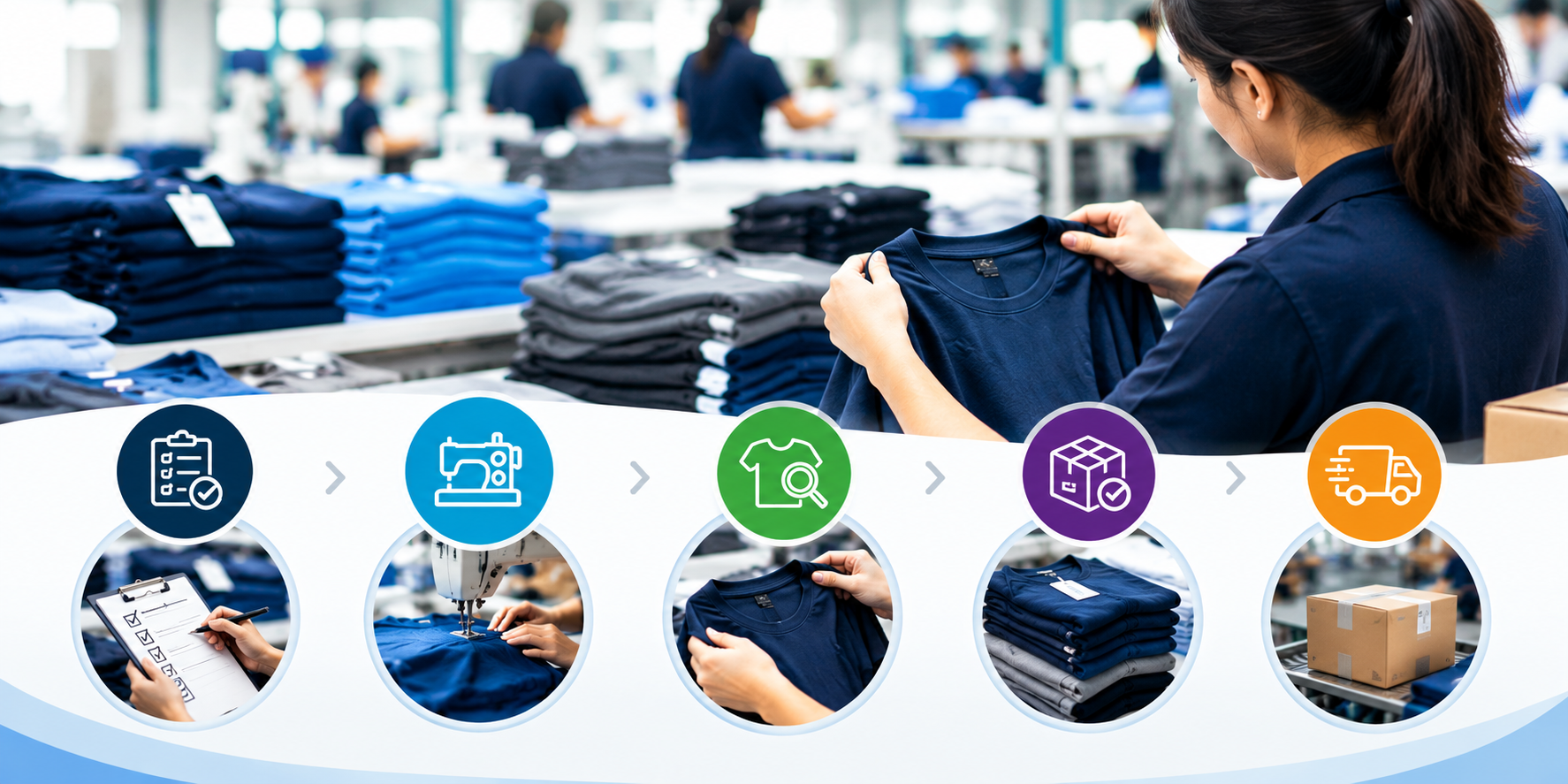
- UPF test report checked against the fabric lot used in your order.
- Colorfastness to light, salt water, and perspiration, the three things a fishing shirt meets every day.
- Shrinkage after wash and measurement audit across the full size range.
- Print alignment across seams on sublimated panels.
- Seam strength at the vented back and underarm panels.
- Final random inspection before packing.